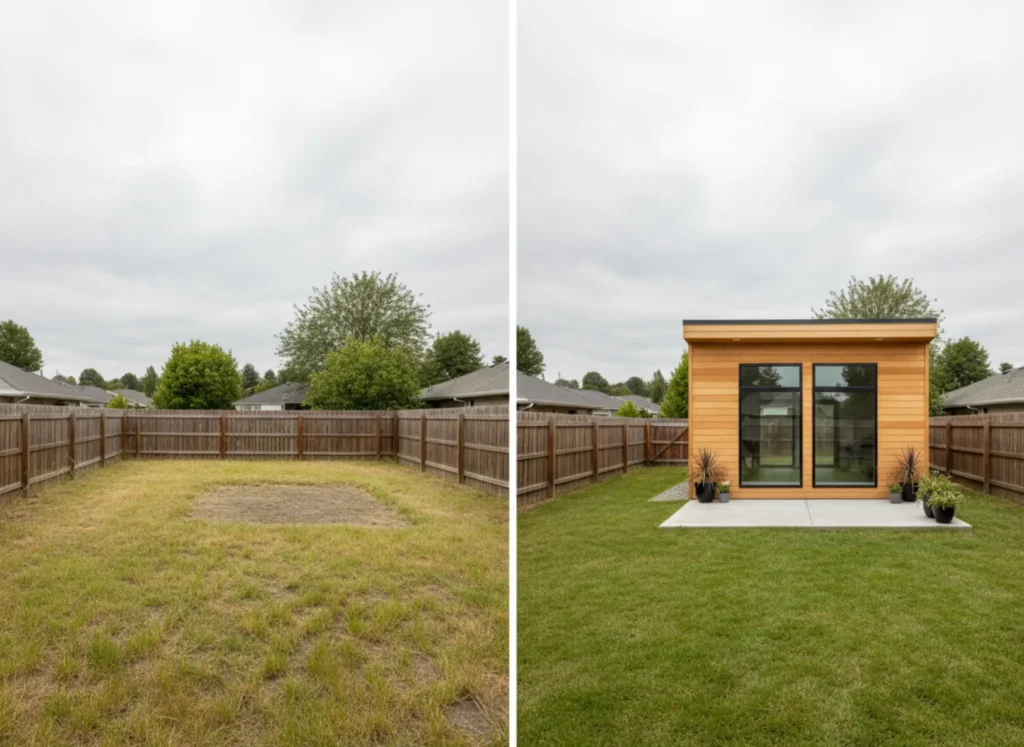
The average Backyard ADU Cost in California ranges from $150,000 to $400,000, with most homeowners spending between $250 and $600 per square foot. The total price depends on square footage, site conditions, local permit fees, construction labor costs, and the level of interior finishes. A garage conversion ADU may cost significantly less, while a fully custom detached ADU with high-end materials can exceed $400,000 in major metro areas.
Need to know the full ADU construction cost breakdown helps homeowners plan realistically and avoid budget surprises.
Backyard ADU Cost Breakdown in California
The total Accessory Dwelling Unit construction cost includes both hard costs and soft costs. Hard costs cover the physical construction of the structure, while soft costs include design, permitting, and professional services.
Below is a simplified cost breakdown table for a typical 600–800 square foot detached ADU.
| Cost Component | Estimated Range | Description |
| Architectural Plans & Design Fees | $8,000–$20,000 | Includes floor plans, structural engineering, and Title 24 energy compliance documentation |
| Permits & Impact Fees | $5,000–$25,000 | City-specific building permits, school impact fees, and plan review costs |
| Site Preparation & Foundation Work | $15,000–$50,000 | Includes excavation, grading, soil testing, and slab foundation installation |
| Construction & Framing | $100,000–$250,000 | Covers lumber, roofing, insulation, windows, and general contractor labor |
| Utility Connections | $10,000–$30,000 | Sewer, water, electrical trenching, and panel upgrades |
| Interior Finishes & Fixtures | $20,000–$75,000 | Cabinets, countertops, flooring, appliances, bathroom fixtures |
The largest cost driver is usually construction labor and materials, which are significantly higher in Northern California markets like the Bay Area compared to inland regions.
What Is the Cost Per Square Foot for an ADU in California?
The typical ADU cost per square foot in California ranges between $250 and $600. Smaller units often appear cheaper overall, but their per-square-foot cost is usually higher because fixed expenses such as permitting, utility hookups, and architectural design fees are spread across fewer square feet.
For example, a 400 square foot backyard ADU may cost $300–$600 per square foot, while an 800 square foot detached ADU might average closer to $250–$400 per square foot. Larger builds benefit from economies of scale but require a higher total project budget.
Location also matters. In high-demand cities like Los Angeles and San Jose, elevated construction labor rates and stricter zoning requirements push per-square-foot pricing toward the higher end of the range.
Cost by Type of Backyard ADU
Different ADU types come with different structural and regulatory requirements. Choosing the right type significantly affects the final ADU construction budget.
Detached ADU Cost
A fully detached backyard ADU typically costs between $200,000 and $400,000 or more. This option requires new foundation work, roofing, independent utility connections, and full structural framing. Detached units offer the most privacy and rental flexibility, but they are also the most expensive to build.
Garage Conversion ADU Cost
A garage conversion ADU generally costs between $80,000 and $150,000. Because the main structure already exists, homeowners avoid major framing and roofing expenses. However, costs may increase if the existing garage requires structural reinforcement, seismic upgrades, or extensive plumbing work.
Prefab or Modular ADU Cost
A prefabricated ADU or modular ADU usually ranges from $120,000 to $250,000, depending on manufacturer and site preparation needs. While factory-built units can reduce construction timelines, homeowners must still budget for foundation installation, utility hookups, and local permit approvals.
Junior ADU Cost
A Junior Accessory Dwelling Unit (JADU) is the most affordable option, typically costing between $50,000 and $100,000. JADUs are created within the existing footprint of a primary home and require minimal structural expansion. They are ideal for homeowners seeking a low-cost rental or family housing solution.
What Factors Influence Backyard ADU Cost in California?
The total Backyard ADU Construction Cost is determined by a combination of structural, regulatory, and market-based variables. While size is important, it is not the only pricing driver. Understanding the main cost factors helps homeowners build an accurate ADU project budget before submitting permit applications.
Below are the primary factors that influence Accessory Dwelling Unit pricing.
Square Footage and Layout Design
The most visible cost driver is square footage, but layout complexity matters just as much. Open studio layouts typically require fewer plumbing lines and structural partitions than a multi-room design. Adding features like vaulted ceilings, large sliding glass doors, or a second story increases both labor and material costs. Efficient floor planning can reduce unnecessary construction expenses.
Site Conditions and Property Constraints
Every property has unique site preparation requirements. Sloped lots may require retaining walls, grading, or deeper foundation work. Poor soil conditions can trigger additional geotechnical engineering reports and reinforced slab foundations. Limited backyard access may increase labor time because materials must be transported manually rather than by equipment.
Utility Connections and Infrastructure Upgrades
Connecting the ADU to existing water lines, sewer systems, and electrical panels can significantly affect cost. If the main electrical panel requires upgrading to support additional load, homeowners may spend several thousand dollars more. Long trenching distances between the main house and the backyard unit also increase labor and excavation costs.
Permit Fees and Impact Fees
Although California ADU regulations have reduced some barriers, homeowners must still pay building permit fees, plan check fees, and in some cases school impact fees. Fees vary by city and county. Urban municipalities with high development demand often charge higher permitting costs.
Construction Labor and Material Costs
Regional construction labor rates strongly influence overall pricing. Coastal cities typically have higher wage requirements and contractor demand. Fluctuations in lumber prices, supply chain delays, and inflation also impact total project cost. Material volatility can change project estimates within months.
Finish Level and Customization
Choosing between builder-grade finishes, mid-range materials, or luxury interior finishes creates a wide pricing range. Custom cabinetry, quartz countertops, premium flooring, and smart home systems can substantially increase the budget. Standardized finishes help maintain predictable costs.
Permit Fees and California ADU Laws
Recent updates to California State ADU Legislation, including Senate Bill 9, AB 68, and related housing laws, have simplified the ADU approval process. These laws limit excessive parking requirements and reduce discretionary review in many jurisdictions. However, local governments still enforce building safety standards and collect permit-related fees.
Homeowners must comply with Title 24 Energy Standards, which regulate insulation levels, window efficiency, and energy performance. Newly constructed detached ADUs may require solar integration depending on project specifics and local interpretation of energy codes. In addition, properties located in Wildland-Urban Interface zones may face stricter fire safety requirements.
Even though the legal framework supports ADU development, permitting remains a cost factor that cannot be overlooked in a realistic ADU financial plan.
How Much Does a Backyard ADU Cost in Major California Cities?
Location significantly affects Backyard ADU Pricing due to variations in labor costs, land values, and municipal fees. Below is a general comparison table of average detached ADU construction costs in major markets.
| City | Estimated Cost Range | Key Cost Influencers |
| Los Angeles ADU Cost | $200,000–$400,000 | High labor demand, urban permit complexity |
| San Diego ADU Cost | $180,000–$350,000 | Coastal regulations, strong rental demand |
| San Jose ADU Cost | $250,000–$450,000 | Elevated labor rates, high property values |
| Sacramento ADU Cost | $150,000–$300,000 | Lower labor costs, moderate permit fees |
| Orange County ADU Cost | $200,000–$380,000 | Competitive contractor market, zoning restrictions |
Urban areas with higher housing demand generally experience elevated Construction Labor Costs and longer contractor lead times. Rural or inland regions often offer lower overall project budgets, though site conditions may vary.
How Market Conditions Affect Backyard ADU Cost
Beyond construction variables, broader Real Estate Market Trends also influence ADU pricing. In competitive housing markets, contractor availability becomes limited, driving up bids. Rising mortgage rates may increase financing costs for homeowners using Home Equity Lines of Credit or Construction Loans.
Inflation in building materials, particularly lumber and steel, directly affects project estimates. During periods of high demand, general contractors may prioritize larger projects, resulting in higher bids for smaller ADU builds. Monitoring market timing can help homeowners secure more favorable pricing.
How Much Rental Income Can a Backyard ADU Generate?
Rental income varies by city, unit size, and neighborhood demand. In major metro areas, a well-designed 600–800 square foot ADU may generate competitive monthly rental income compared to small apartments.
| City | Estimated Monthly Rental Range | Influencing Factors |
| Los Angeles Rental ADU Income | $1,800–$3,000 | Location, parking availability, transit access |
| San Diego Rental ADU Income | $1,700–$2,800 | Coastal demand, proximity to employment centers |
| San Jose Rental ADU Income | $2,200–$3,500 | Tech-driven housing demand |
| Sacramento Rental ADU Income | $1,400–$2,200 | Lower cost market, steady growth |
| Orange County Rental ADU Income | $1,900–$3,200 | Strong rental competition |
When calculating ADU investment returns, homeowners should subtract operating expenses such as maintenance, insurance, and property tax adjustments.
How Long Does It Take to Build a Backyard ADU in California?
The average ADU Construction Timeline ranges from 6 to 12 months. The process includes planning, approvals, and physical construction.
The timeline typically breaks down as follows:
- Design and Architectural Planning: 1–3 months
- Permit Approval Process: 1–4 months (varies by city)
- Site Preparation and Foundation Work: 1 month
- Framing and Structural Construction: 2–3 months
- Interior Finishes and Final Inspections: 1–2 months
Delays can occur due to plan revisions, contractor scheduling, or inspection backlogs. Working with professionals familiar with local Building Department Requirements can reduce approval delays.
Frequently Asked Questions
Building a fully detached ADU for $100,000 is rare in most California cities. That budget may work for a small Junior ADU or basic garage conversion, but material costs and permitting expenses usually push detached builds above $150,000.
A Prefabricated ADU may reduce construction time and labor costs, but homeowners must still budget for foundation work, permits, and utility connections. In some cases, total savings are moderate rather than dramatic.
Yes, a permitted Accessory Dwelling Unit generally increases resale value, particularly in areas with strong rental demand. Buyers often view ADUs as income-generating assets.
Yes, statewide legislation supports ADU development, but homeowners must comply with local zoning rules, safety codes, and permit procedures.
A Backyard Accessory Dwelling Unit can be a strong long-term investment, especially in high-demand housing markets. Adding a detached ADU or garage conversion ADU often increases overall property value while creating potential rental income. In many California cities, rental demand remains strong due to housing shortages and rising home prices.
Model Your Greater Sacramento Backyard ADU Build Budget: Ground-up backyard cottages in Sacramento County require Title 24 Part 6 solar integration, 4-foot SB 9 setback verification, and dedicated sewer lateral trenching. Generate an itemized square-foot estimate using our interactive Detached ADU Construction Cost Calculator. To schedule an on-site lot feasibility assessment, visit our Detached ADU Builders in Antelope & Greater Sacramento, CA hub.